
Case study · Platform record · Platform record · Case tracking
E-CTC
We built Electronic Case Tracking as the procedural layer in the Vinkura stack: one record of milestones, documents, and handoffs from investigation toward court.
- Who
- Investigating units, supervisory desks, and prosecution coordination
- Where
- In the Vinkura operating stack, beside e-Maalkhana and Forge
- Mission
- Make case readiness visible before a filing or a hearing
01 / The situation
Cases lose momentum when progress, documents, dependencies, and review observations sit in separate files and informal follow-up. Charge-sheets wait because evidentiary completeness is not visible. Forensic reports return to the wrong desk. Hearing dates arrive before the file is ready. That is not a merit problem. It is a coordination problem.
We did not invent a yatra for this product. E-CTC is in production as the case-coordination system in our stack, designed to sit next to e-Maalkhana custody — already launched at Mirganj — and the duty and command layers departments already run.
02 / What we built
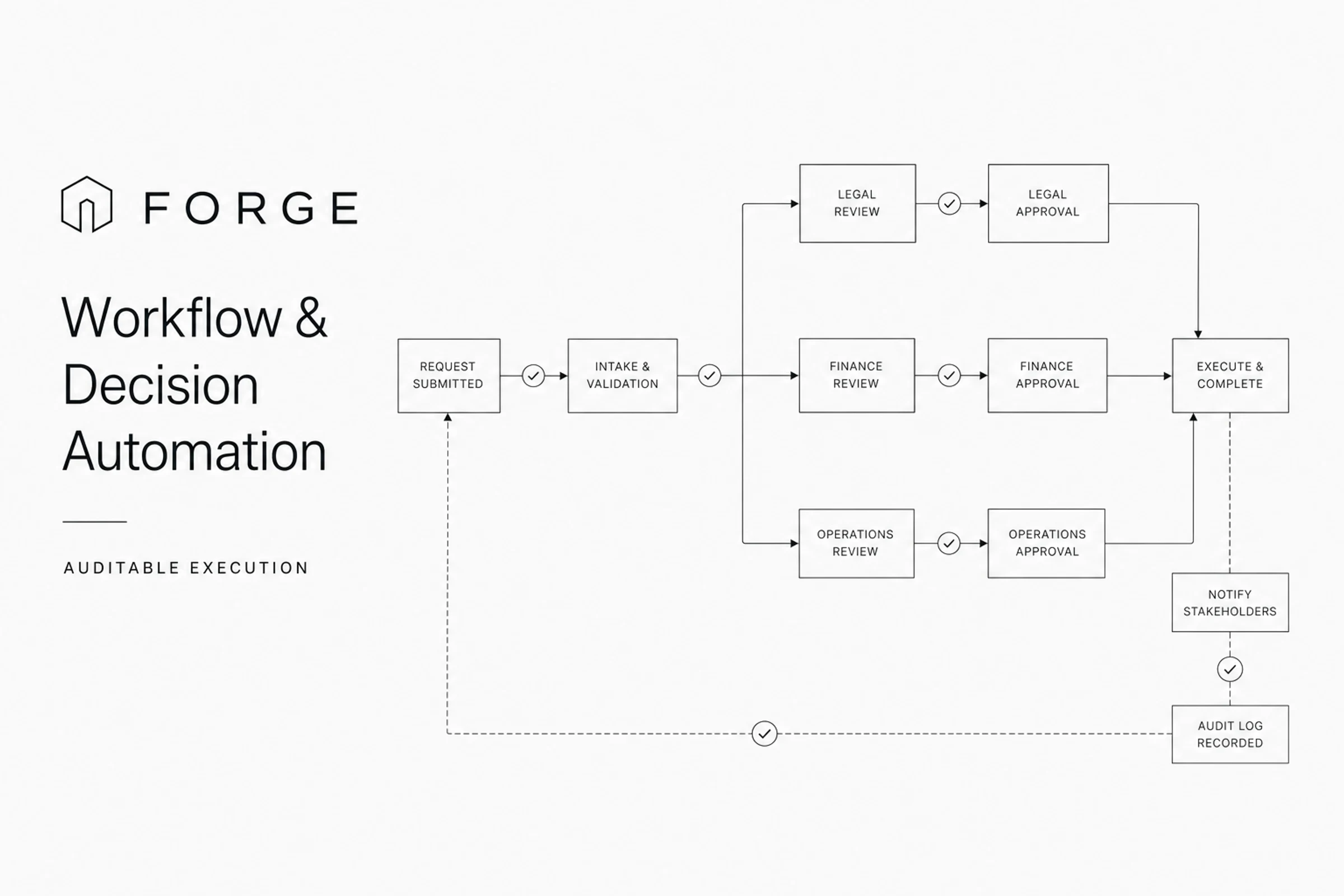
We built E-CTC to hold the procedural record for a case: configured stages, required documents, supervisory directions, prosecution handoff, and court-readiness review. It does not displace the authority of existing official systems. It keeps one picture of what is still outstanding.
Dependencies are first-class. A forensic return, an evidence item, a witness step, or an approval that is still open is visible to the investigating team and the responsible desk before the deadline, not diagnosed afterwards. Forge supplies the procedure. AEGIS supplies identity, audit, and hosting.
- 01Structure
Create the procedural plan, required documents, roles, and deadlines.
- 02Coordinate
Move work across investigation, supervision, forensics, and prosecution.
- 03Review
Surface omissions, delay, observations, and unresolved dependencies.
- 04Prepare
Assemble a complete, traceable record for the next authorised stage.
Lifecycle on one record
FIR-linked initiation through charge-sheet preparation and hearing readiness, with timestamps and responsible authority.
Document completeness
Required records are monitored so gaps surface before supervisory or prosecution review.
Dependency-aware alerts
Outstanding forensics or evidence items block a false sense of readiness. Delays escalate to the named desk.
Procedural audit
Submissions, returns, edits, directions, and approvals remain reviewable.
03 / How it ran
In the stack, an investigating team opening a case can see assigned officers, evidence still in the maalkhana lifecycle, the next hearing, and pending forensic work without asking each desk to re-enter the same file. That is the adjacency we already own: e-Maalkhana at Mirganj is the custody record E-CTC is built to read.
There is no separate press clip that names E-CTC. The coverage that matters here is the evidence and platform reporting already in our newsroom — Amar Ujala on Mirganj, The Hindustan Wires on the operating platform.
04 / What changed
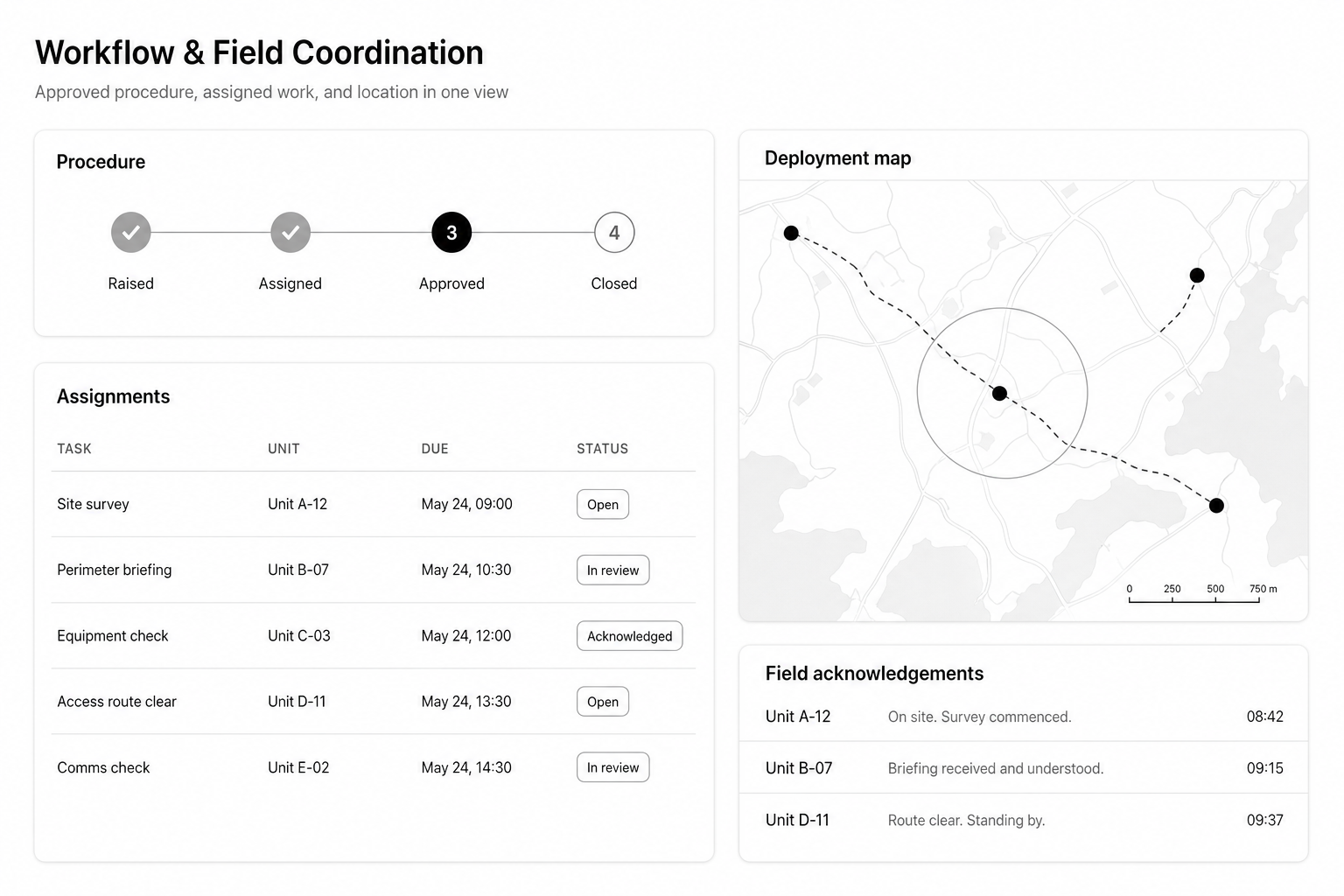
Investigators, prosecutors, forensic teams, and supervisors can work from one readiness picture. Missing prerequisites and approaching deadlines become visible inside the case workflow.
The institution retains a clear record from investigation through court preparation, with ownership of pending action attached to a named desk.
05 / Where we take this
We are taking E-CTC deeper into the handoff with e-Maalkhana so court-production and forensic-return states are not copied between systems.
Next on our side: tighter Sentinel visibility of stalled cases beside live operations, and Forge procedure versions so a departmental circular becomes the workflow the case actually runs.
06/ News & media
E-CTC has no named-system clip of its own. These are the adjacent field and platform stories it is built to sit beside.
- Amar Ujala · HindiBareilly district's first e-Maalkhana inaugurated at Mirganj police station ↗
Custody record E-CTC is built to coordinate against for court production.
- The Hindustan Wires · EnglishHow Vinkura is building a sovereign AI platform for mission-critical operations ↗
Platform context for case coordination inside a sovereign stack.
07 / Connected systems
08 / Request a briefing
Talk to us about running this architecture in your district, unit, or command. We brief from the systems we have already deployed — not from a slide of hypotheticals.
Request a briefing