
Case study · Field record · Field record · Evidence & property
e-Maalkhana
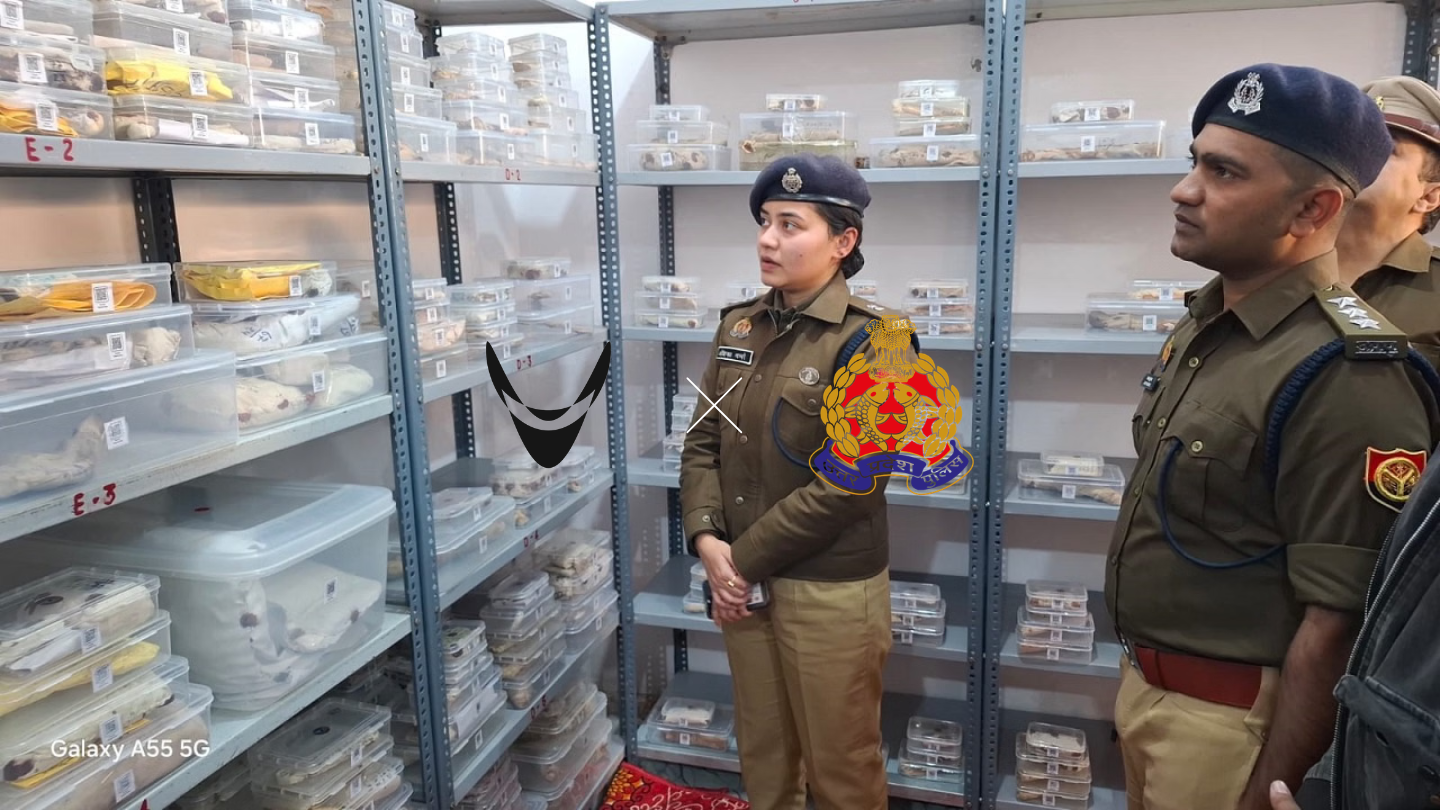
We launched structured digital property and evidence records at Mirganj, reported as Bareilly district’s first e-Maalkhana — so custody is a lifecycle, not a register someone remembers.
- Who
- Bareilly Police · Mirganj police station
- Where
- Mirganj, Bareilly district, Uttar Pradesh
- Mission
- Give every seized item a current custodian, location, and history
- 1st
- Digital maalkhana in Bareilly district Amar Ujala, 21 January 2026
- 1
- Launch station: Mirganj Amar Ujala
01 / The situation
A maalkhana is not a storeroom. It holds property and evidence that may move between the station, forensic examination, and court. When those movements live in paper registers, finding the current custodian or storage position depends on manual searching and local memory. At handover, the next officer inherits the gaps as well as the register.
Evidence management needs more than a spreadsheet. It needs consistent item records, controlled updates, and a history that can be reviewed when an investigation or a hearing demands it.
02 / What we built
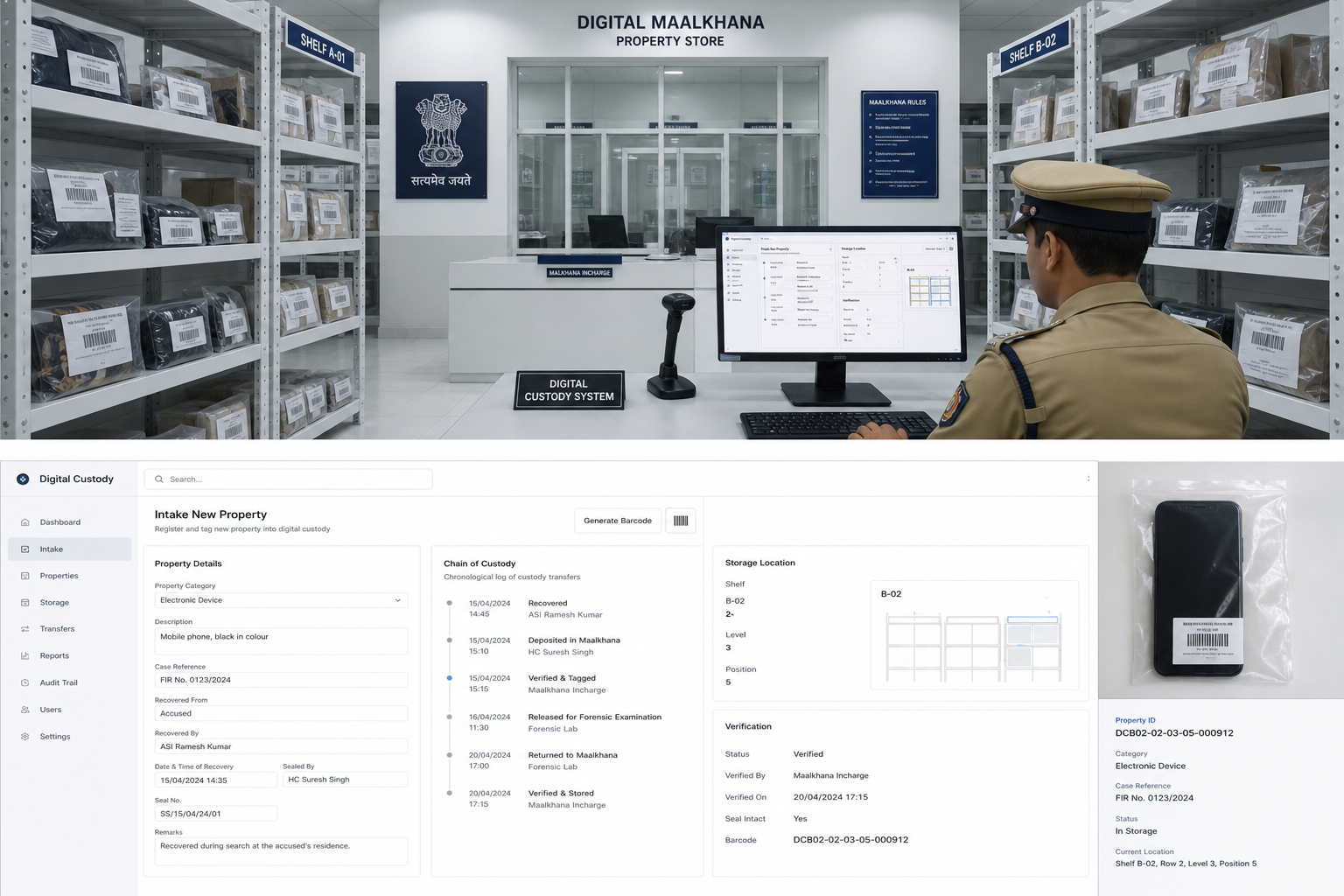
We built e-Maalkhana around the evidence lifecycle: seized, stored, checked out, sent to forensics, returned, produced in court, released, or disposed. Each item receives a digital identity linked to its case and physical location. Authorised movements update the same record and extend the chain-of-custody trail rather than starting a new notebook.
Roles govern who may move or update an item. QR identification reduces ambiguity during physical verification. Sovereign and on-prem options keep sensitive case and evidence data under agency control, including in station environments where internet access is restricted.
- 01Register
Create the authoritative intake record and item identity, linked to the case.
- 02Secure
Assign controlled storage — room, rack, shelf — and handling conditions.
- 03Trace
Record every authorised movement, inspection, forensic handoff, and acknowledgement.
- 04Close
Complete verified release, court production, or disposal with the required approvals.
Custody, not generic inventory
Every transition requires authorisation. There is no gap where an item exists without a documented custodian.
Findable records
Locate an item by case number, FIR reference, or date range. Bulk questions — items pending forensic return before a hearing — become routine.
Role-bound movement
A constable cannot authorise destruction. A lab cannot mark items returned without receiving-officer confirmation.
Station-first, including offline
The workflow is built for day-to-day station use, including environments where connectivity is restricted or unreliable.
03 / How it ran
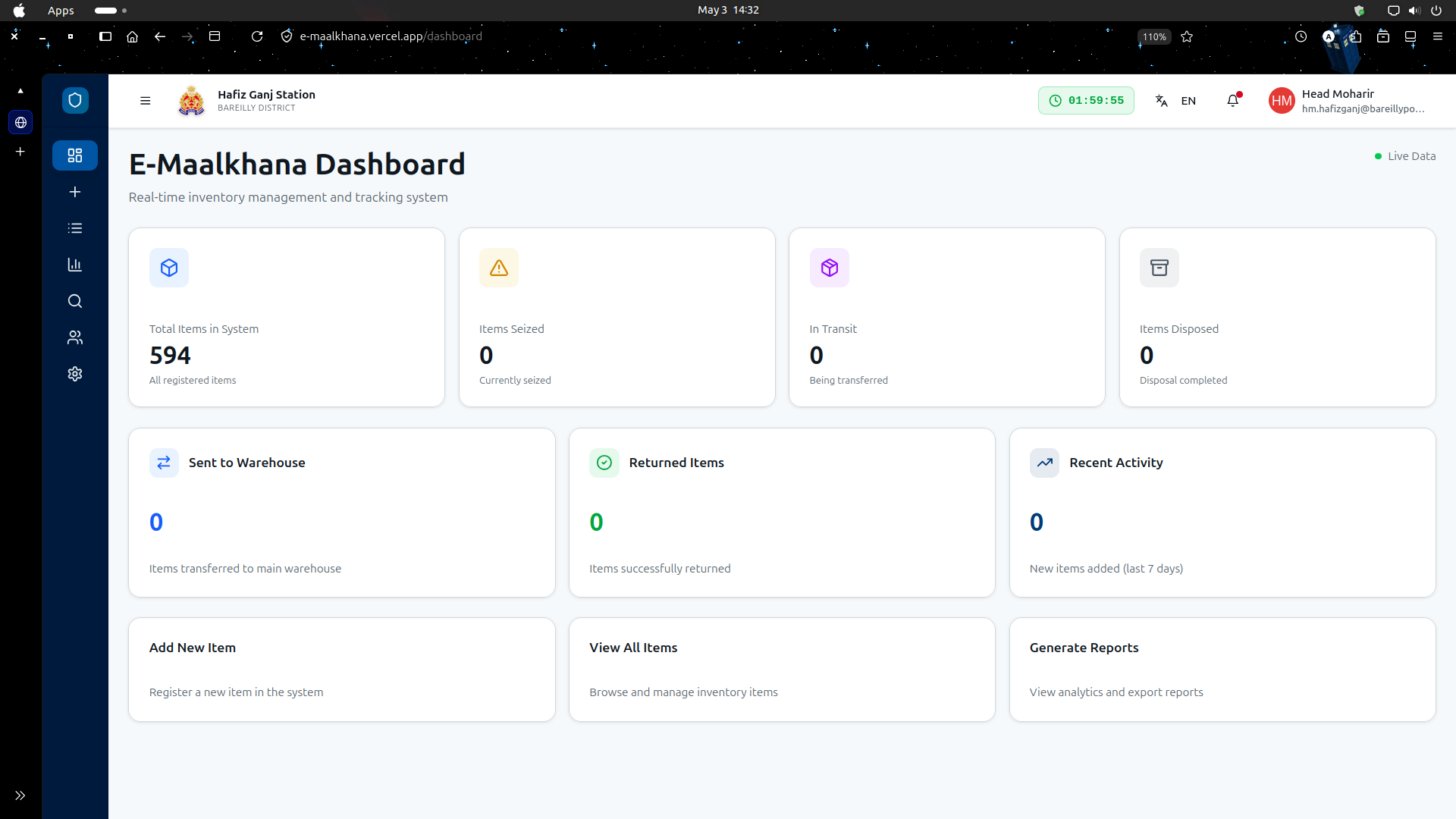
At Mirganj, personnel locate a record by its operational references, verify where the item should be, and record each handoff at the moment it occurs. Supervisors see the same history during checks and handovers. The next officer inherits the chain, not a set of separate notes.
Amar Ujala reported the launch as Bareilly district’s first e-Maalkhana, inaugurated at Mirganj police station on 21 January 2026.
04 / What changed
The station gained a structured record for seized property and evidence, replacing person-dependent recall with an institutional workflow.
Custody history became easier to retrieve, review, and hand over. Every authorised movement contributes to an auditable record the institution owns.
05 / Where we take this
We are taking e-Maalkhana from a first-station launch into a district custody pattern: the same lifecycle, configured per station store and specialised unit.
Next on our side: tighter binding to E-CTC so court-production dates and forensic returns sit on the same case picture, and ARGUS/Eagle Eye evidence exports that arrive already attached to the custody record.
06/ News & media
Named-system coverage of the Mirganj launch.
- Amar Ujala · HindiBareilly district's first e-Maalkhana inaugurated at Mirganj police station ↗
Launch coverage, 21 January 2026.
07 / Connected systems
08 / Request a briefing
Talk to us about running this architecture in your district, unit, or command. We brief from the systems we have already deployed — not from a slide of hypotheticals.
Request a briefing