
Case study · Platform record · Platform record · Operational voice
Voice
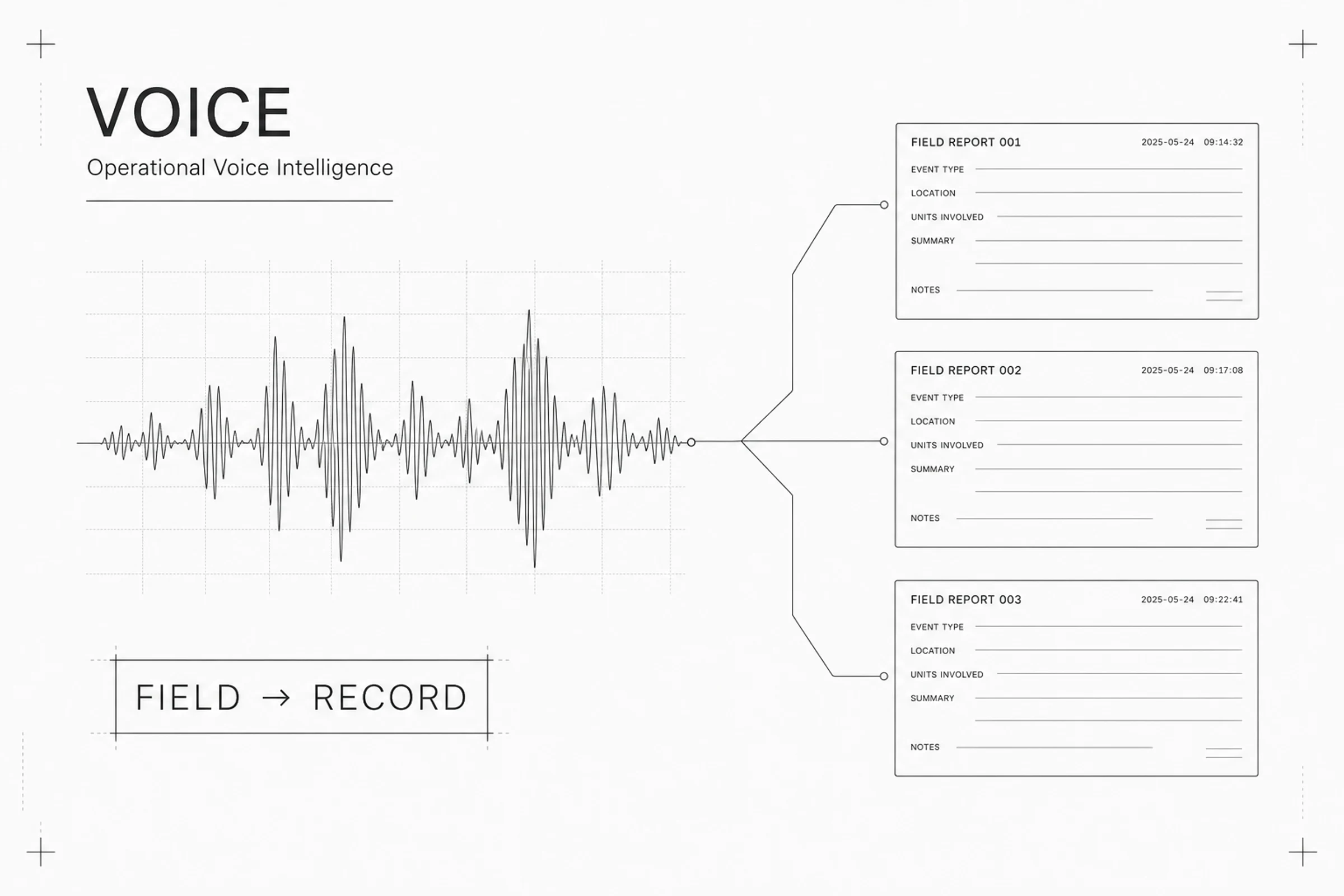
We built Voice so authorised radio, calls, interviews, and spoken field reports become structured, source-linked records — with a person reviewing anything that becomes official.
- Who
- Command rooms, field reporting, helplines, and authorised channels
- Where
- In the Vinkura stack, adjacent to Trinetra field ops and DDMS duty
- Mission
- Stop losing what was said first and typed hours later
01 / The situation
Critical context is often spoken first and documented later. Officers in chaotic, noisy, multilingual environments cannot type a complete incident while they are in it. What was said on the radio becomes a memory, an imprecise call, or nothing.
Voice is in the stack as the capture layer for that gap. We do not claim a named yatra clip for Voice. The adjacency is honest: Trinetra and DDMS already run in the field; Voice is how spoken reports enter those records without treating an automated transcript as fact.
02 / What we built
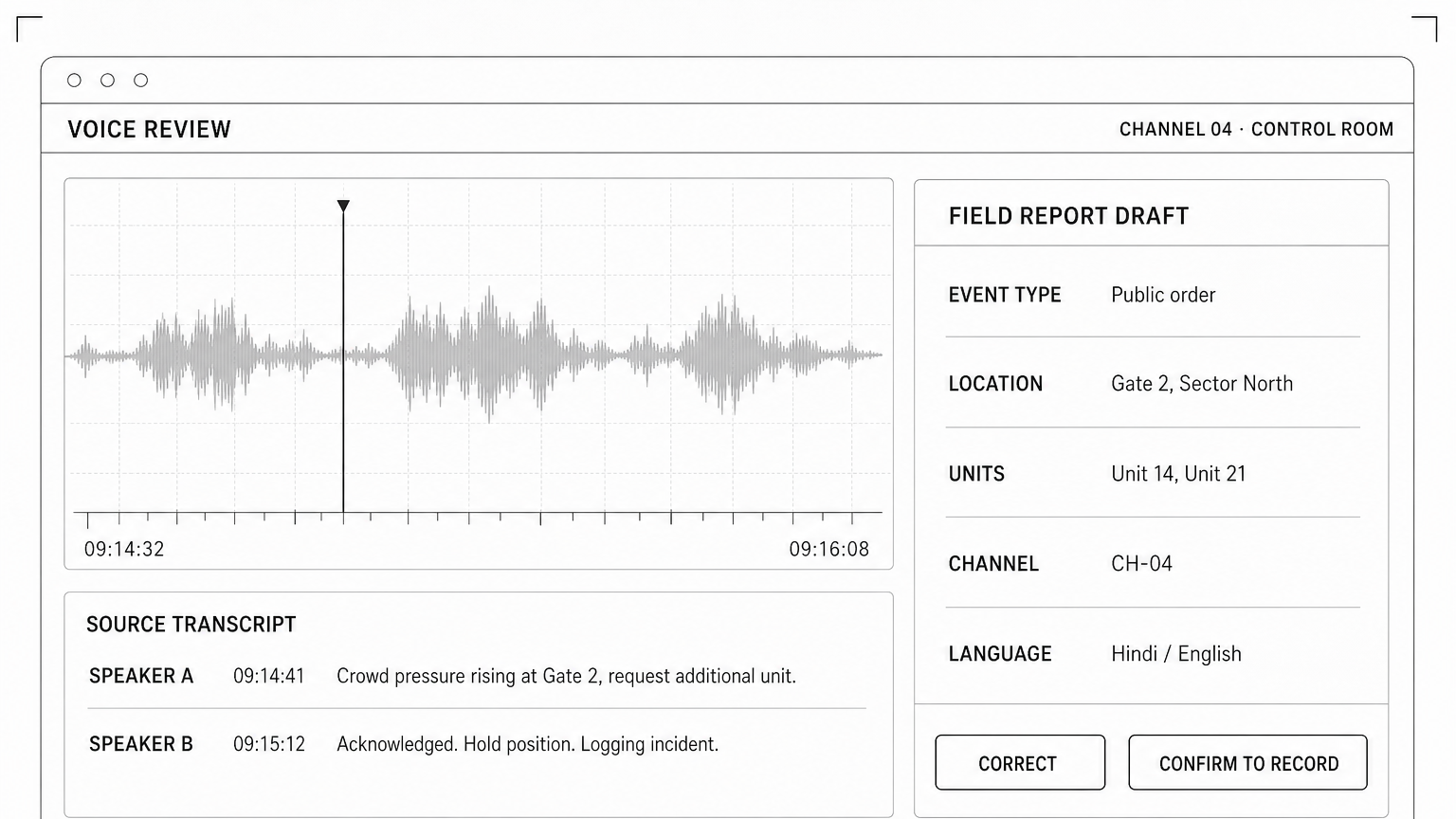
We built Voice to convert authorised audio into time-aligned transcripts and candidate fields, then require human verification before consequential use. Hindi–English code-switching and mixed-language conditions are first-class. Channel, time, source, and configured speaker context travel with the audio.
Approved information commits into the relevant operational workflow — a Trinetra field update, a DDMS exception, an E-CTC note — with the source audio still attached. AEGIS governs processing, retention, and access.
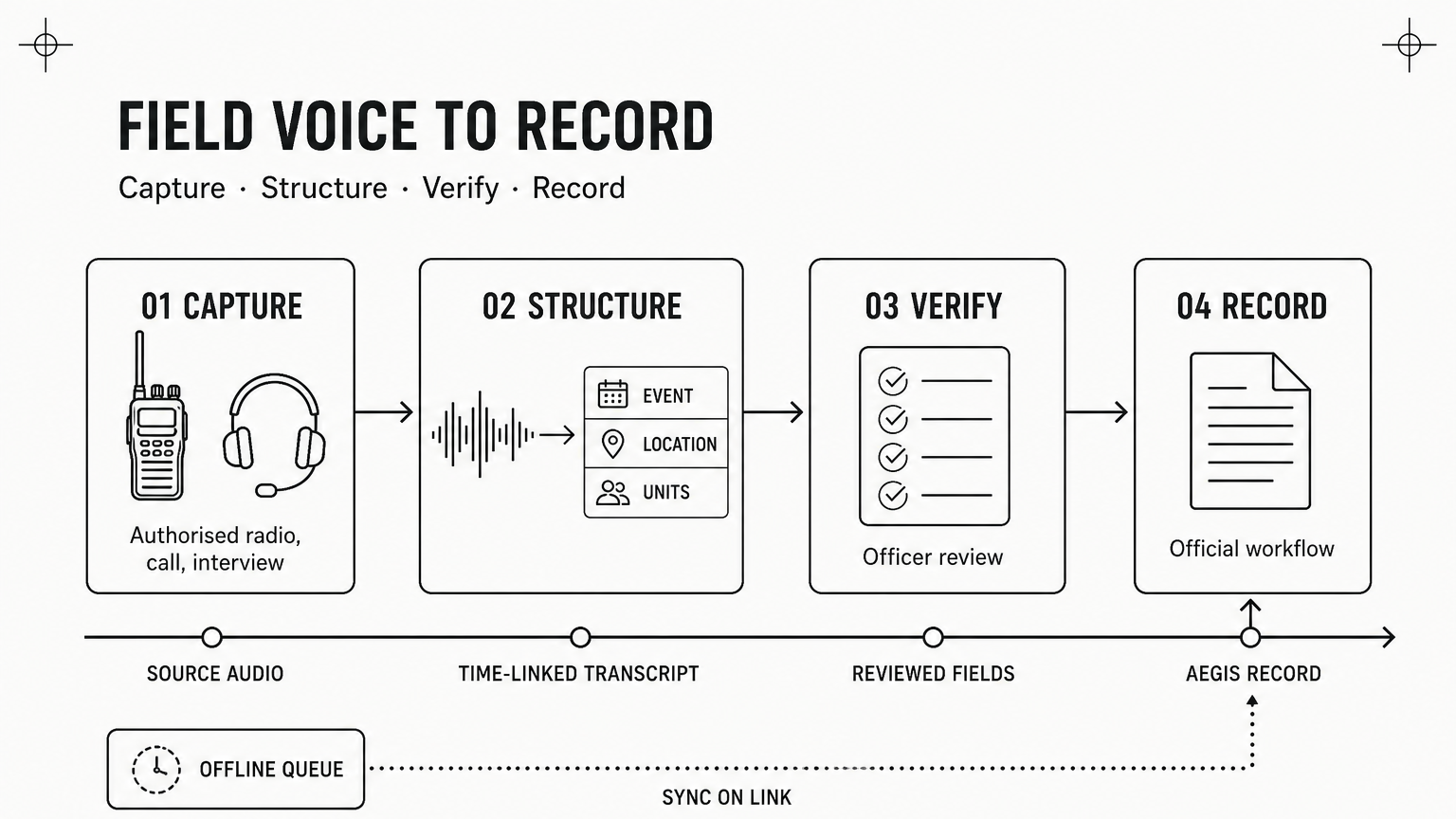
- 01Capture
Receive authorised audio with source and operational context.
- 02Structure
Generate time-linked transcripts and candidate fields.
- 03Verify
Route consequential outputs for authorised human review.
- 04Record
Commit approved information to the relevant operational workflow.
Field transcription
Time-aligned transcripts from authorised radio, call, interview, and field recordings.
Multilingual by design
Configured Indian languages and mixed-language speech, including Hindi–English code-switching.
Structured reporting
Reviewed speech into incident fields, tasks, summaries, and official workflow inputs.
Human verification
An automated transcript is never unquestioned fact. Review sits on the path to the official record.
03 / How it ran
An officer can speak a situation report or resource request while remaining focused on the scene. Voice converts that into a structured draft for the relevant workflow. Command receives context with a path back to the source audio.
Related coverage is the field systems Voice is built to feed: Hindustan Wires on Trinetra, Dynamite News on DDMS, Dainik Jagran on Eagle Eye — another human-led review loop in a different modality.
04 / What changed
Less is lost between the spoken report and the official record. Retrieval of relevant audio becomes possible against words, entities, incidents, and time.
Field reporting is more consistent, and every machine-generated output that matters has a traceable human review.
05 / Where we take this
We are taking Voice from the stack into tighter Trinetra and DDMS capture so a spoken exception can land on the duty or corridor record without a second form.
Next on our side: command-room channel review inside Sentinel, and redaction workflows that keep sensitive audio inside AEGIS retention policy.
06/ News & media
Voice has no named-system clip of its own. These are the field stories it is built to write into.
- The Hindustan Wires · EnglishHow Vinkura is building a sovereign AI platform for mission-critical operations ↗
Trinetra field coordination — the record spoken reports should enter.
- Dynamite News · HindiMuzaffarnagar Police deploys DDMS for Kanwar Yatra 2026 ↗
Duty exceptions that often start as a radio call.
- Dainik Jagran · HindiBareilly Police uses Eagle Eye software to review video from multiple sources ↗
A sibling human-led review loop: visuals in Eagle Eye, speech in Voice.
07 / Connected systems
08 / Request a briefing
Talk to us about running this architecture in your district, unit, or command. We brief from the systems we have already deployed — not from a slide of hypotheticals.
Request a briefing