
Case study · Field record · Field record · Identity & access
Pehchan
We made a 12,545-provider registration context verifiable in the field: one QR identity, checked at the point of contact, on a corridor that served more than 4.8 lakh pilgrims.
- Who
- Ganderbal Police
- Where
- Sonamarg and the Baltal axis, Amarnath Yatra 2026
- Mission
- Tell a registered provider from someone who simply turned up
- 12,545
- Service providers registered by 2 June J&K Labour Department reporting
- 4.8 lakh+
- Pilgrims in the 2026 Yatra KNO / Hindustan Times
- 2
- Yatra axes served: Baltal and Pahalgam Public Yatra record
01 / The situation
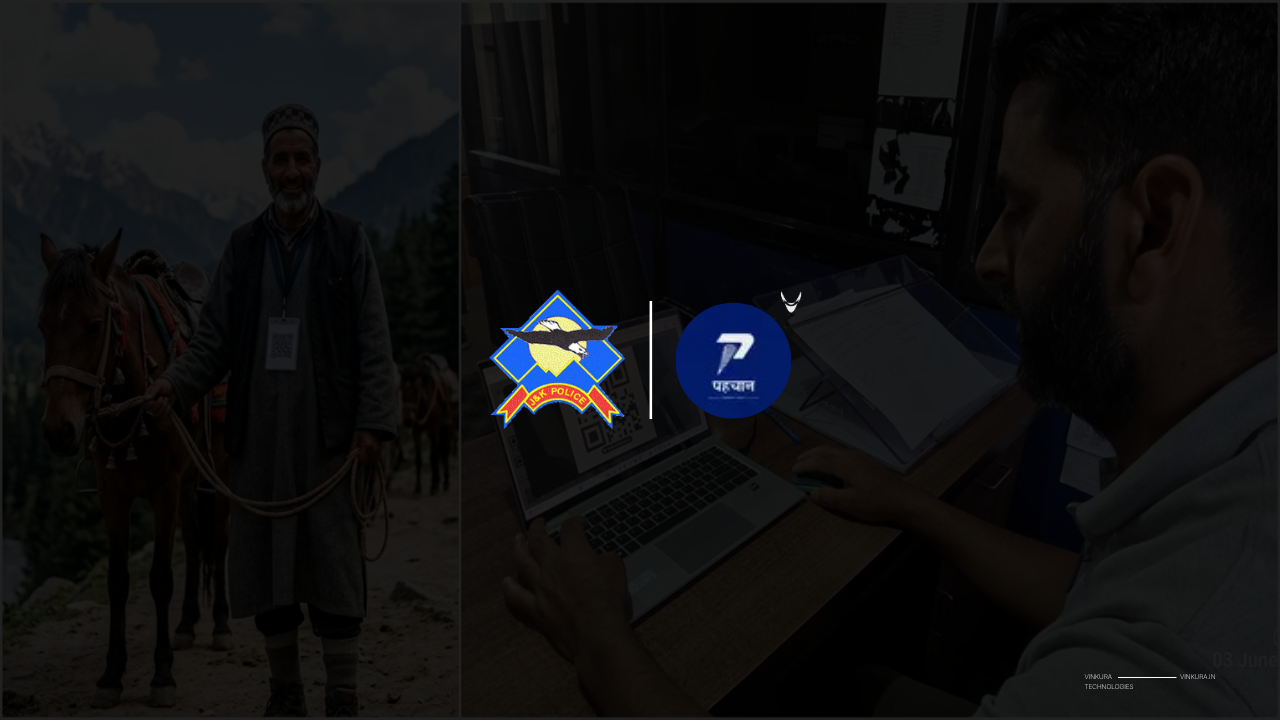
By 2 June 2026, the Labour Department had registered 12,545 service providers in Ganderbal for an Amarnath Yatra that went on to serve more than 4.8 lakh pilgrims. Ponywallas, porters, drivers, guides, and camp staff work across a wide mountain corridor. Telling a registered provider from someone who simply turned up meant trusting a paper list held somewhere else — no help to an officer at a checkpoint or a family hiring a pony at Baltal.
Seasonal operations bring a large, changing workforce into sensitive ground. Manual lists go stale. Physical credentials are slow to validate. A delayed check creates a queue at precisely the wrong place. The system had to be fast enough for a queue and accountable enough for a corridor.
02 / What we built
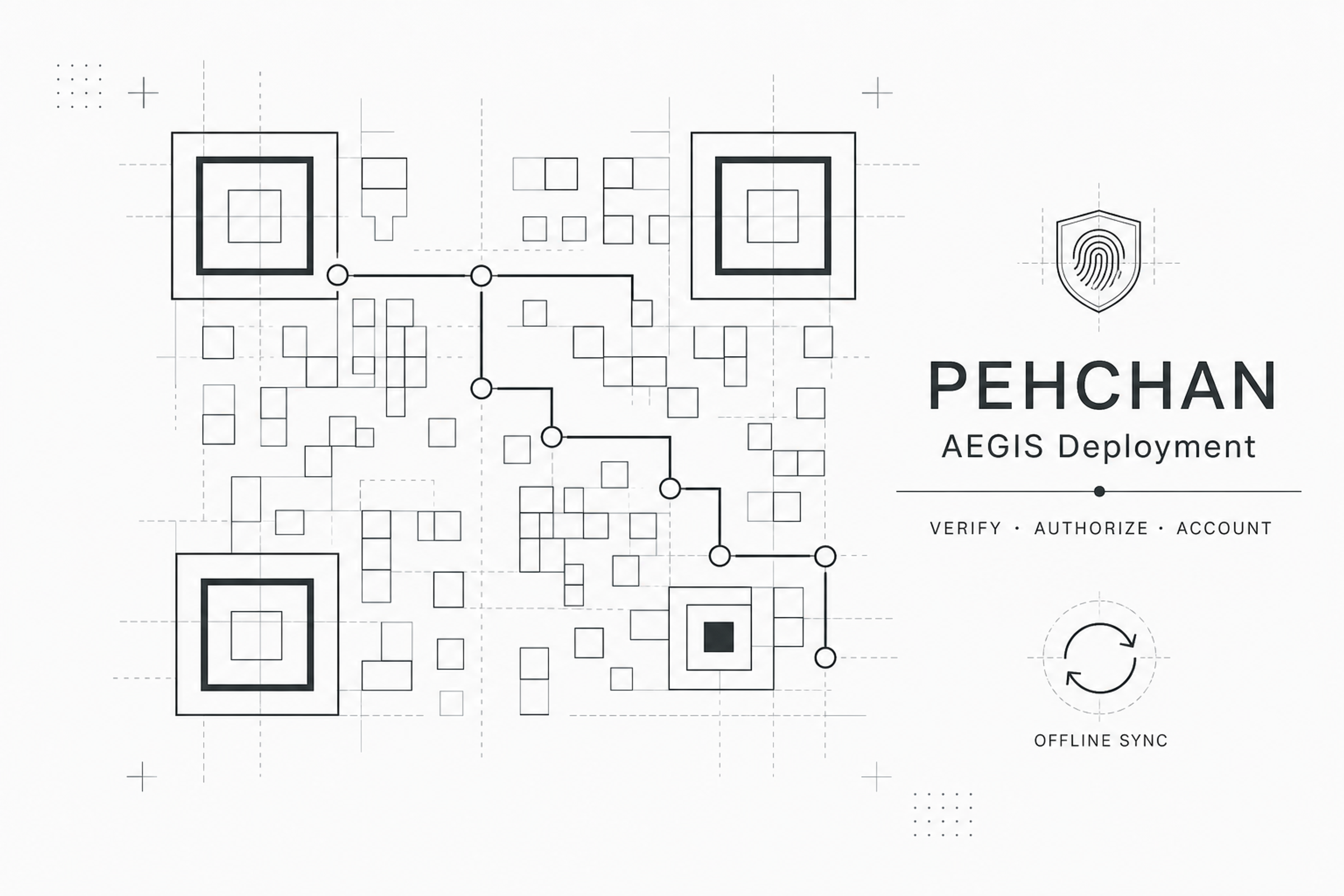
We built Pehchan as an operational identity layer on AEGIS, not a badge-printing database. Each authorised provider receives a unique QR identity. A scan returns the registered identity and current status. The code itself reveals no useful personal detail; authorised verification resolves the live record.
Enrolment, issuance, verification, and status changes return to one record, so a decision at Baltal is based on the same source of truth as a review in the control room. Sovereign or on-prem deployment keeps institutional identity data under agency control.
- 01Enrol
Create the authorised provider record against the registration context the department already holds.
- 02Issue
Bind a unique QR identity that exposes nothing useful on its own.
- 03Verify
Scan at the checkpoint or service interaction and resolve the current record.
- 04Account
Preserve who enrolled, issued, scanned, or changed status.
Operational identity, not a printable badge
The QR code is a pointer. Authorised verification resolves who the person is and whether they are cleared to work there.
Fast enough for a queue
We designed the check for repeated checkpoint use: one scan, a current answer, no slow paper-led lookup.
One corridor record
Field scans and control-room reviews share the same provider status. A change in one place is the change everywhere.
AEGIS identity controls
Roles, tenant boundaries, and an audit trail of enrolment, issuance, scans, and status changes travel with the record.
03 / How it ran
At a checkpoint or service interaction, the QR identity turns a distant register into an immediate answer. The officer or visitor scans once, sees the current provider record, and makes the verification where the interaction is happening.
India TV and The Kashmir Horizon covered the Ganderbal launch ahead of Amarnath Yatra 2026. The Labour Commissioner’s review of 12,545 registered providers is the registration context Pehchan made usable on the ground.

04 / What changed
Police teams gained one corridor-wide verification workflow. Legitimate providers gained a recognisable identity. Pilgrims gained a direct way to check the people serving them.
Identity moved from a distant list into the field operation — across a registration context of 12,545 people on a corridor serving more than 4.8 lakh pilgrims.
05 / Where we take this
We are taking Pehchan as the identity pattern for other seasonal and corridor workforces: the same QR loop, the same AEGIS controls, configured to the register a department already runs.
Next on our side: closer binding of a verified provider into Trinetra field posts and Sentinel command views, so a checkpoint decision is visible to the rest of the corridor operation.
06/ News & media
National and regional coverage of the Ganderbal Pehchan launch and the 12,545-provider registration context.
- India TV News · EnglishQR-based 'Pehchan App' launched ahead of Amarnath Yatra 2026 ↗
National coverage of the QR verification workflow, 4 June 2026.
- The Kashmir Horizon · EnglishPolice launches Pahchan App in Ganderbal ahead of Amarnath Yatra 2026 ↗
Ganderbal Police launch for Sonamarg and the Baltal axis, 10 June 2026.
- The Kashmir Horizon · EnglishLabour Commissioner reviews registration of 12,545 service providers in Ganderbal ↗
The registration context Pehchan made verifiable in the field.
07 / Connected systems
08 / Request a briefing
Talk to us about running this architecture in your district, unit, or command. We brief from the systems we have already deployed — not from a slide of hypotheticals.
Request a briefing